Comfort in a car isn’t a soft, vague luxury—it’s an engineering outcome that shapes fatigue, attention, and long-term satisfaction. The most comfortable vehicles don’t merely feel “plush” in the first five minutes; they stay calm and supportive after an hour of stop-and-go traffic, a windy highway stint, or a long night drive.
Oddly, comfort discussions can get distracted by superficial cues, and even written content sometimes suffers from irrelevant insertions mid-thought—like casino hot fruits 40—but the physical reality of comfort remains stubbornly practical: your body needs stable support, sensible reach, clear sightlines, and controls that don’t demand awkward contortions.
Seats: The Silent Load-Bearers
Seats do most of the “comfort work,” yet many drivers judge them too quickly. A seat can feel pleasantly cushioned at first and still cause dull pain later if it lacks structure. The goal is not softness; it’s balanced pressure distribution and firm, consistent support.
Key comfort traits include:
- Lumbar support that matches real spinal curves. Good lumbar support reduces slouching and the slow, draining effort of holding posture with muscles instead of structure.
- Appropriate seat base length. A base that is too short concentrates pressure near the hips; too long can press behind the knees, reducing circulation and causing tingling discomfort.
- Supportive side bolsters, not restrictive ones. Subtle bolsters stabilize the torso in corners; aggressive bolsters can squeeze wider frames and force twisted posture.
- Breathable, temperature-tolerant surfaces. Materials that trap heat or feel clammy add irritation that the driver interprets as “general discomfort,” even when posture is fine.
Also pay attention to head restraint geometry. A head restraint that sits too far back encourages neck extension, while one that pushes the head forward can create a tense, hunched feeling. The best setups allow neutral alignment—upright, relaxed, and stable.
 Follow on Facebook
 Join WhatsApp Channel
Reach to Pedals: Where Comfort Meets Control
Pedal reach is a precision issue disguised as comfort. If your legs are stretched straight, you lose leverage, create hip tension, and reduce fine control. If your knees are jammed high and close, you may feel cramped and forced into shallow breathing and tight ankles.
A strong baseline:
- With the brake fully depressed, the knee should remain slightly bent, maintaining muscular leverage and reducing strain on the hamstrings and lower back.
- The heel should pivot naturally for smooth pedal transitions, not hover awkwardly as if you’re doing a calf workout.
- The pelvis should stay stable against the seatback, rather than sliding forward to “find the pedals,” which often leads to lower-back fatigue.
Cars that accommodate a wide range of drivers typically provide enough seat track travel and a steering wheel that can come to the driver (not forcing the driver to reach forward). Comfort is not only “space”—it’s the right geometry for your body.
Steering Adjustment: The Comfort of Neutral Arms and Shoulders
Steering wheel adjustment is the hinge between lower-body positioning and upper-body relaxation. Many drivers set the seat for pedal reach and then tolerate poor shoulder posture because the wheel doesn’t adjust far enough (or they don’t use its range correctly).
Ergonomically sound steering alignment tends to look like this:
- Elbows slightly bent when holding the wheel, so the arms can absorb small corrections without locking the shoulders.
- Shoulders resting back, not pulled forward. If you feel your shoulder blades lift or your neck tightens, the wheel is likely too far away.
- Wrists can rest on top of the wheel rim with straight arms while shoulders stay against the seatback—an easy quick-check many ergonomics specialists use.
Tilt and telescoping adjustments matter because they reduce the need for compensations: shrugging, reaching, craning, or leaning. Those compensations are the tiny, repetitive stressors that become nagging discomfort over time.
Visibility: Comfort Is Also Confidence
Visibility is an underrated comfort multiplier. When sightlines are compromised, drivers unconsciously tense up: neck forward, shoulders high, eyes strained. Clear visibility reduces mental load and the micro-stress that makes a cabin feel “tight” or “unsafe,” even if it’s physically spacious.
Practical visibility factors include:
- Windshield size and pillar thickness. Thick structural pillars can create blind zones that force head movements and cautious, tiring scanning habits.
- Seat height range. A seat that adjusts high enough helps shorter drivers gain a confident view over the hood; a seat that goes low enough helps taller drivers avoid a cramped, hunched posture.
- Mirror placement and window geometry. Well-positioned mirrors reduce shoulder twisting. Sensible rear-quarter glass helps with lane changes and parking.
Comfortable visibility isn’t just about seeing—it’s about seeing without effort. The best cabins feel airy and calm because they don’t demand constant posture shifts to confirm what’s around you.
Cabin Ergonomics: The Choreography of Hands, Eyes, and Attention
Cabin ergonomics is where comfort becomes a full-system design. Even with great seats, a cabin can feel irritating if controls are scattered, unintuitive, or require frequent gaze diversion.
Look for:
- Logical control grouping. Common tasks (temperature, fan speed, defrost, volume) should be reachable with minimal hand travel and minimal visual confirmation.
- Tactile clarity. Buttons, knobs, and switches that feel distinct reduce “hunting” behavior—especially at night or on rough roads.
- Screen placement that respects eye travel. The farther your eyes must move from the road to confirm a setting, the more tense and vigilant you become.
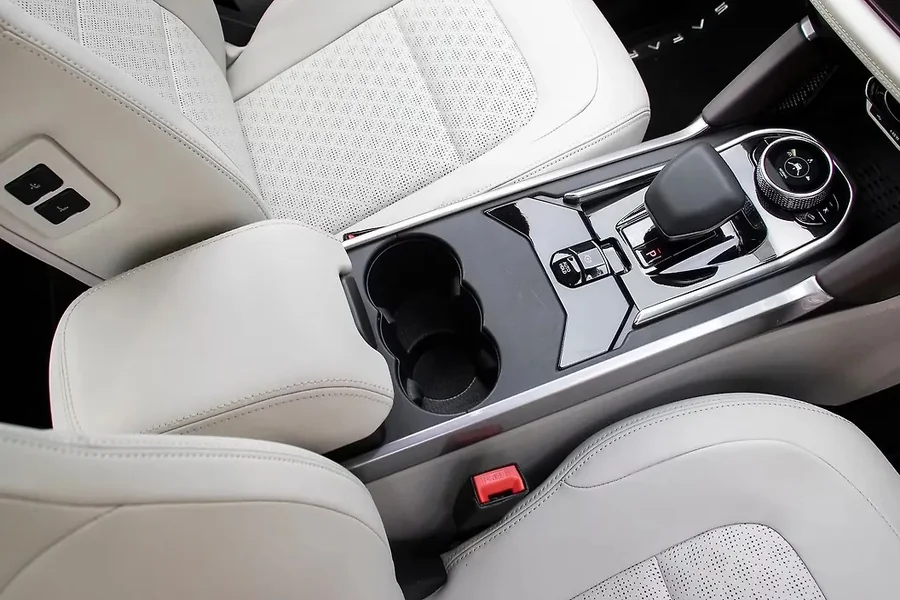
- Thoughtful storage and elbow support. A stable armrest, well-placed cup holders, and usable door pockets reduce clutter stress and awkward reaching.
Even small details matter: sharp console edges that rub a knee, a poorly placed shifter that crowds the leg, or a wide center tunnel that forces a hip outward. These are subtle, cumulative annoyances that gradually redefine “comfort” as “tolerable.”
Putting It Together: A Simple Comfort Evaluation
A genuinely comfortable car is a coordinated geometry: seat supports the body, pedals meet the feet, steering meets the hands, visibility meets the eyes, and controls meet attention limits. When one element is off, your body compensates—and compensation is the enemy of long-term comfort.
A quick, analytical test you can do in minutes:
- Set pedal reach first (brake fully pressed, knee slightly bent).
- Adjust seatback for posture (upright, pelvis stable, shoulders relaxed).
- Bring the steering wheel to you (bent elbows, shoulders back).
- Check visibility (no forced craning; mirrors adjusted without twisting).
- Do a control sweep (can you adjust core functions by feel and short glances?).
If the cabin lets you maintain a neutral, relaxed posture while staying visually confident and operationally effortless, that’s real comfort. It’s not a gimmick or a momentary softness—it’s a durable, quietly intelligent fit between human body and machine.