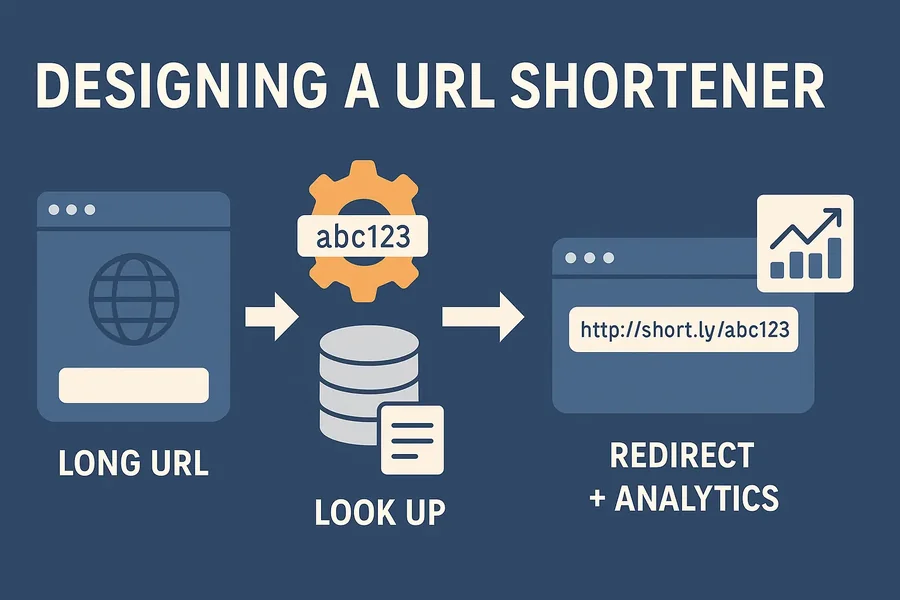
Building Your Own URL Shortener Platform is a thrilling and feasible undertaking to corporate entities, web developers and marketers to gain complete control of their links and analytics. Rather than using a third party service, develop your own system will enable you to brand it, capture more detailed data and provide long term reliability. With links shared on social media, email and ads in a digital world, a standalone shortener platform can enhance user experience and reinforce your brand name. Even a basic installation can produce mighty effects with the proper attitude.
The Reason Why You should create your own URL shortener
People and companies have various reasons why they prefer building their own URL shortener as opposed to existing ones. Branding is considered one of the greatest benefits. A custom domain will make your links appear more professional and trusted and that can boost the number of clicks Track clicks easily with Uitly.
Another key reason is data ownership. With the third party platforms, your analytics data is frequently constrained or managed by the provider. The self-assembled system allows you to access user data and analyze them in detail.
It is also significant to be flexible. A custom site enables you to integrate functions that fit your unique requirements, like campaign monitoring, expiration dates or user controls.
Another factor is security. Self-hosting your shortener allows you to be less reliant on third-party services, and have more control over links and privacy.
 Follow on Facebook
 Join WhatsApp Channel
Basic Building blocks of a URL Shortener Platform
In order to create a working URL shortener, one must be aware of its main components. The key element in the system is a database holding original URLs and shortened ones. Every long URL will be converted to a short one.
Application logic is in charge of creating these short codes and redirection. On clicking a short link, the system searches the long URL associated with the short one in the database and redirects the user immediately.
A user interface is also important. This enables the users to easily create, control and monitor their links بسهولة. Simple and clean dashboard enhances usability and adoption.
Another important component is analytics. The ability to track clicks, locations, and devices will give useful information that can assist users in optimizing their campaigns.
Lastly, you need a domain or a subdomain on which to store your short links. This is what the users shall view and work with.
Selecting an Appropriate Technology Stack
The choice of technology stack is an important process in constructing your platform. The option is determined by your experience, project needs, and scalability objectives.
In terms of backend, the most popular are Node.js, Python, and PHP. They are commonly supported and utilized, implying that they are appropriate to construct web applications.
In the case of the database, you have an option of relational databases such as MySQL or PostgreSQL or NoSQL databases such as MongoDB. All of them have their benefits based on how you intend to store and keep data.
Frameworks such as React or plain HTML and CSS could be employed on the frontend to provide a user friendly interface. The idea is to make the experience easy and user-friendly.
Another important consideration is hosting. Cloud services are scalable and reliable so that your system can deal with the growing traffic.
The following are the key features that should be incorporated
An effective URL shortener system must have capabilities that improve usability and performance. One of the most important features is custom link creation. It should help users to form short URLs which will indicate their brand or campaign.
Reporting and analytics are also required. Offering deeper insights into user behavior, clicks and locations is valuable addition.
The link management capabilities like editing, deleting and categorization of links enable users to remain in control. To enhance security, expiration dates or password protection can be added.
The other helpful feature is API access. This will enable developers to connect your platform to other tools and create links automatically.
An added bonus can be the generation of QR codes as well. This enhances the functionality of your platform to more than mere links.
Actions to create your platform
The steps of creating your own URL shortener platform can be divided into specific steps. To begin with, specify your goals and features. Determine the purpose of your platform and the features to have.
Then, configure your development environment and select a technology stack. This is the basis of your project.
Design the database to store URLs and other associated data. Then write the code that will produce short codes and redirect.
Then create the frontend interface that users would interact with the system. Be simple and easy to use.
Include analytics to monitor link performance. This is value-added and enables users to comprehend their data.
Lastly, test your platform and then launch. Make sure that the links are functioning correctly and that the system functions properly in various conditions.
Difficulties and Ways to overcome them
The construction of a URL shortening platform is associated with the problems of its own. One such problem is dealing with traffic. As your platform scales up, you must make sure that your platform is capable of responding to a high number of requests.
Caching and load balancing can be used to enhance performance. These methods decrease the load on servers and improve the response time.
The other issue is to avoid spam and abuse. To ensure the integrity of your platform, it is possible to implement rate limits and keep track of suspicious activity.
Security is also of concern. Access to user data and unauthorized access should be considered as a priority. Cybercrime can be minimized with the help of safe protocols and frequent updates.
Scalability is another important factor. Any system should be designed to expand as your users increase so that you are guaranteed of success in the long run.
Final Thought
It is a satisfying project that can help you not only gain technical but also business advantages as well as building your own URL shortener. It has complete control over your links, data and branding and offers a helpful tool in digital communication.
The success depends on planning, selection of appropriate technologies and emphasis on user experience. Through a dependable and feature rich platform, you will be able to satisfy your needs as well as add value to others.
With the continually developing digital marketing, the presence of a tailored link management system can be a significant competitive edge. The correct strategy can make your platform a potent tool that can be used to fulfill your ambitions and improve your online presence.
FAQs
What is a URL shortener platform?
A URL shortener platform is a system that converts long URLs into shorter links and manages their redirection and tracking.
Why should I build my own URL shortener?
Building your own platform gives you control over branding, data, and features while improving flexibility and security.
What technologies are needed to build a URL shortener?
You need a backend language, a database, a frontend interface, and hosting infrastructure to create a functional system.
Can I track clicks on my short links?
Yes, analytics features allow you to track clicks, locations, and user behavior for each link.
Is it difficult to build a URL shortener platform?
The complexity depends on the features you want, but a basic version can be built with standard web development skills.
How can I make my platform secure?
You can improve security by using HTTPS, implementing authentication, and monitoring for suspicious activity.